
Ask About Working Together

The IKVaS Method

IKVaS: Letting Emotions Move Through Us

The IKVaS Method is a compassionate four-step approach to emotional healing that transforms overwhelming emotions into clarity, resilience, and peace.

The word emotion comes from the Latin emovere—"to move out" or "move through." In these hard times, I built IKVaS on the understanding that emotions are not meant to be ignored, fought, or carried indefinitely but rather, move through us. Each step of the process encourages emotional movement and healing through a gradual process until the emotion naturally softens, resolves, and is released.

Aaron Silverman walking across a lawn at dusk in a teal shirt, a bare tree and brick houses behind him
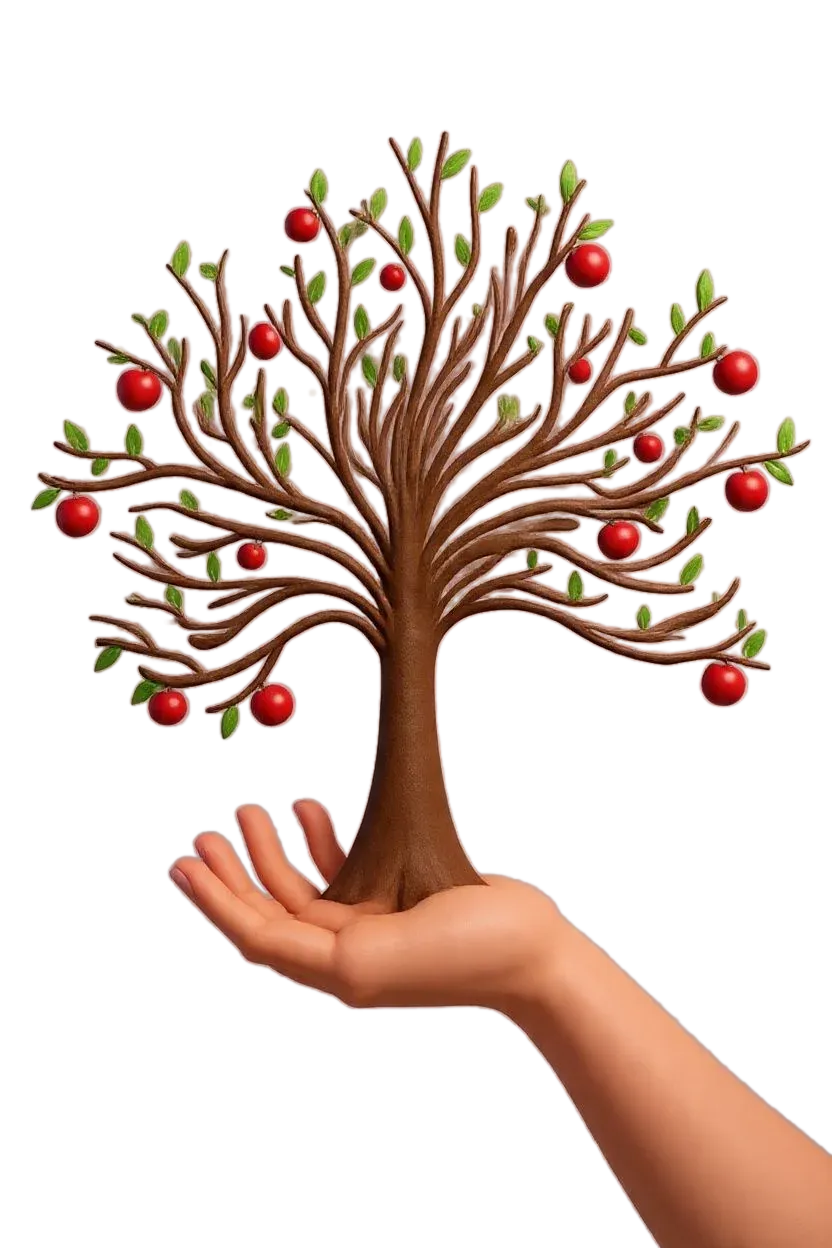
The tree with red apples, fully grown in the open hand

The four steps

One

Identify

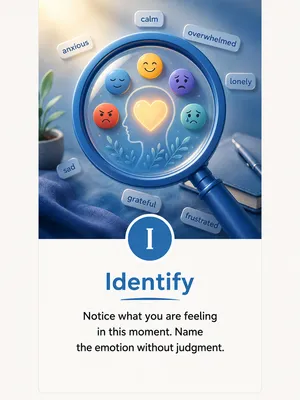
A magnifying glass reveals colorful emotion emojis with words like anxious, calm, lonely, and sad, above the word Identify.

First, you Identify (name) the adverse emotion a part of you is experiencing in the present moment.

'Unblend' by 'looking at' and identifying that a part of you is feeling something (anger, fear, shame, hurt, sadness etc) as well as look past the surface for underlying emotion. “A part of me is feeling rejected, and underneath that rejection is fear (e.g. of being unwanted, that I’ll be left alone, that I don’t matter)."
Two

acKnowledge

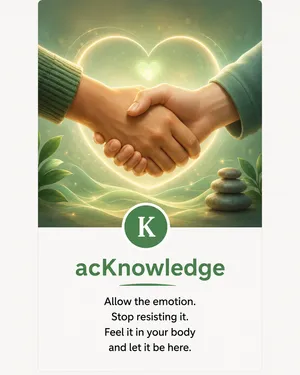
Two hands shaking in front of a glowing heart, illustrating the acKnowledge step of emotional acceptance.

Next, you acKnowledge the emotion by allowing yourself to genuinely feel it rather than suppressing or resisting it.

Once you identify the part and its feeling (and the accompanying underlying vulnerable feeling), acKnowledge 1) its presence spatially in your body and 2) allow its expression to be present (emote). Let the part know that you see it and are willing to hear (emotions are self-communication) what it is experiencing rather than ignoring, suppressing, or arguing with it. "I see you. You feel rejected and scared right now. I know you’re here, and I’m listening.” The goal is not to change the feeling at this point.

Three

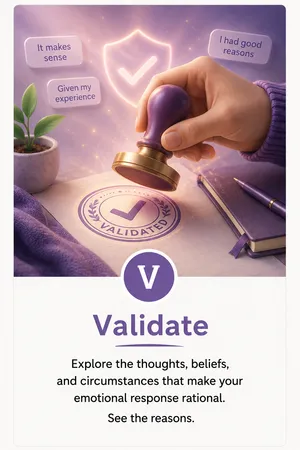
Validate

A hand stamps a document with Validated, surrounded by phrases like it makes sense and I had good reasons.

Then, you Validate the emotion by exploring the thoughts and circumstances that show how the response is rational.

Validation is the opposite of the self-critic. Instead of telling the part, “You shouldn’t feel this way,” “You’re overreacting,” or “What’s wrong with you?” you become curious about why its reaction makes sense. What is this part afraid of? What did the situation mean to it? What past experience or deeper fear did it touch? You might say, “Given what you experienced, that makes sense.” Validating a feeling this way doesn't mean every belief attached to it is accurate, or that every impulse it brings up should be acted on — it means acknowledging that the feeling itself makes sense, so you can respond to it with care instead of judgment.

Four

Self-compassion / forgiveness

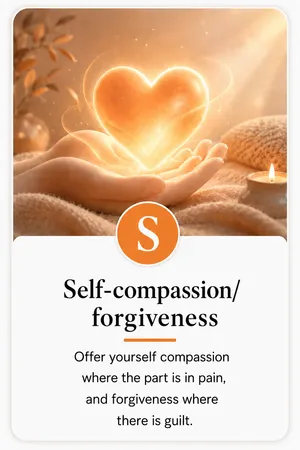
Cupped hands hold a glowing golden heart above soft blankets, representing self-compassion and forgiveness.

Finally, you respond to the part with either self-compassion, when there is emotional pain present, or self-forgiveness when guilt is present.

Compassion: Shame isolates; compassion connects and anti-shames, releasing the pain. Use your Self to stay with the pain of the part rather than leaving it alone in its suffering. Let it know, “I’m here with you. You don’t have to carry this alone.” This connection creates the safety and love the part needs to soften and release.

Forgiveness: If you have made amends and the guilt is still there, release the blame, judgment, and shame directed toward the part with self-forgiveness, saying simply, "I forgive you."

A note on pacing: this process often unfolds gradually, sometimes over several passes through the same feeling. If an emotion doesn't fully resolve the first time, that's a normal part of the process, not a sign that anything is wrong or that you're "doing it wrong."

Ask About Working Together →
Ask About Working Together